Background / History
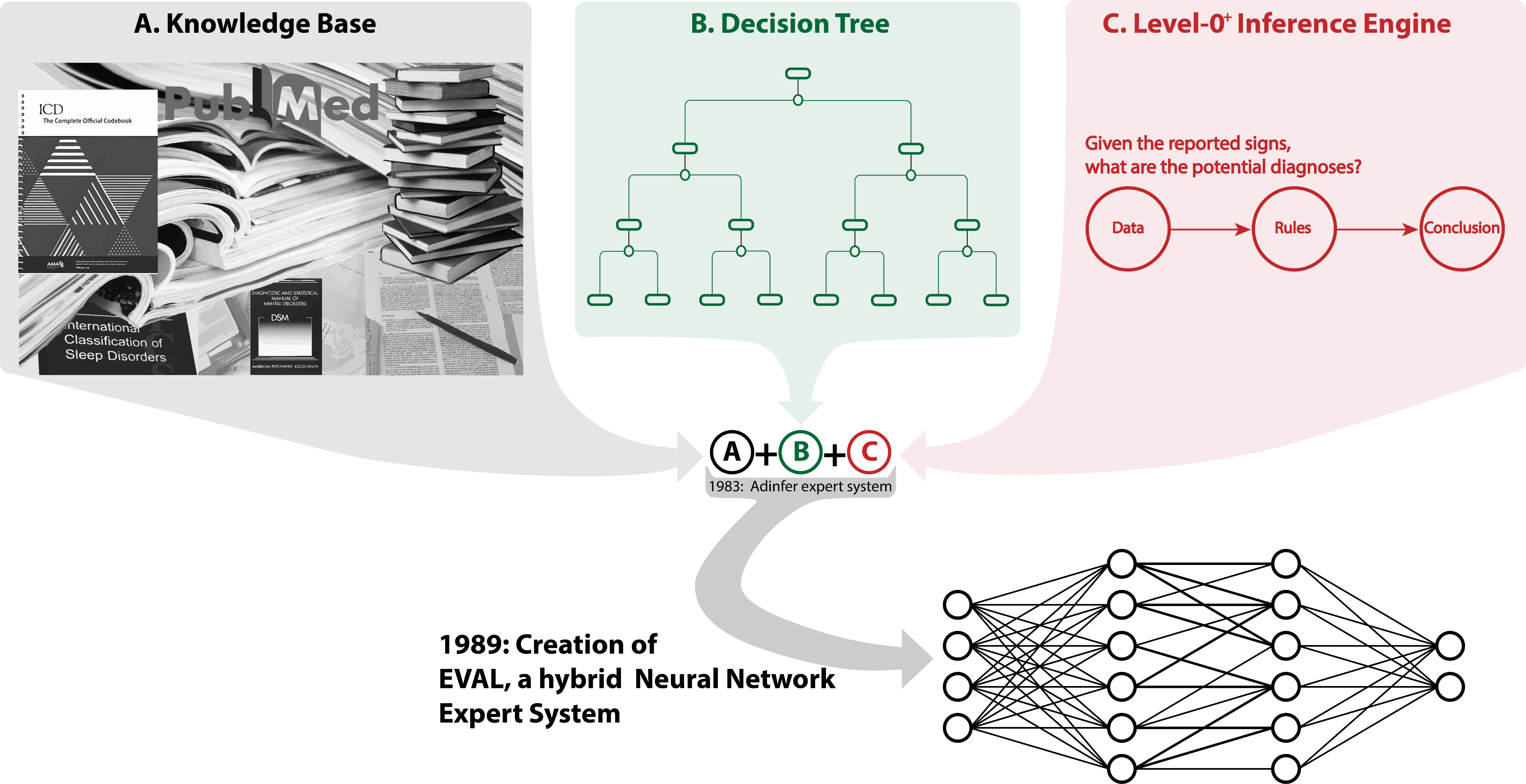
Ad-Infer Clinical AI System is one of the earliest operational clinical AI systems in sleep medicine, developed since 1983 and continuously refined and used in epidemiological studies worldwide with over 500 publications so far.
The system was designed to conduct structured clinical interviews and perform automated diagnostic reasoning in the fields of sleep medicine, psychiatry, and neurology.
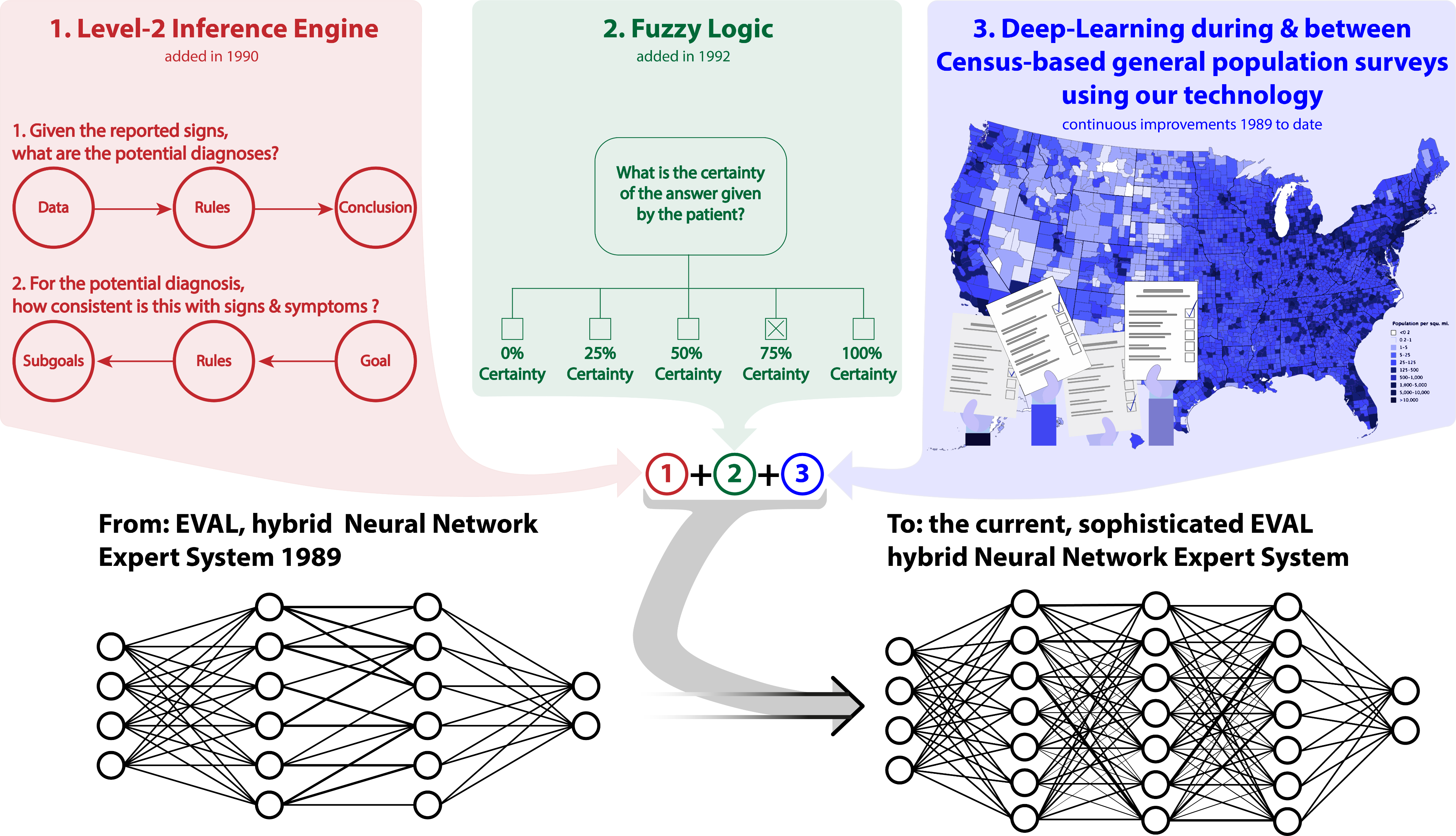
Unlike many contemporary AI tools based primarily on statistical learning, Ad-Infer relies on a clinical inference architecture integrating a structured knowledge base, rule-based reasoning, fuzzy logic, and decision algorithms derived from international diagnostic classifications (DSM, ICSD and ICD frameworks).
Ad-Infer is a hybrid clinical AI system. Its core is a knowledge-driven inference engine (rules, non-monotonic reasoning and fuzzy logic) that generates clinically interpretable diagnostic reasoning. This core is complemented by statistical/ML components for large-scale pattern discovery and by a modern LLM communication layer used for natural-language interaction, clarification and reporting. The LLM layer supports usability; the diagnostic decision authority remains the Ad-Infer inference engine.
Since the early 1990s, the system has been used in large-scale epidemiological studies of the general population, allowing standardized assessment of sleep disorders, psychiatric conditions, and their medical correlates creating Knowledge Oriented Learning Bases (PsyEval, SleepEval, Expertal, MoodEval, FoodEval, NarcoEval, SnoreEval, GerEval) across multiple countries and continents.
The system and its plaftform were evolving going from a single computer/user use to a platform interviewer user to since 2016 a web platform/user allowing several thousands users to access.
The underlying computational framework constitutes the Ad-Infer clinical AI platform, a phenotypic inference system capable of structuring complex symptom data and generating clinically interpretable diagnostic reasoning.